












Across Europe, a growing number of high-net-worth individuals and families are turning their attention to alternative citizenship as a long-term planning tool. Whether driven by a desire for greater personal security, expanded options for future generations, or the ability to live a life in a stable and internationally recognised jurisdiction, the interest in Citizenship by Investment (CBI) programmes has been building steadily for years.
For Europeans considering this route, the options span the Caribbean, the Mediterranean, and beyond. Each programme carries distinct advantages depending on the investor’s specific objectives. The following guide examines five of the most well-regarded programmes in the current market, listed in order of relevance for the European investor: St. Kitts and Nevis, Dominica, Grenada, Malta, and Turkey.
St. Kitts and Nevis
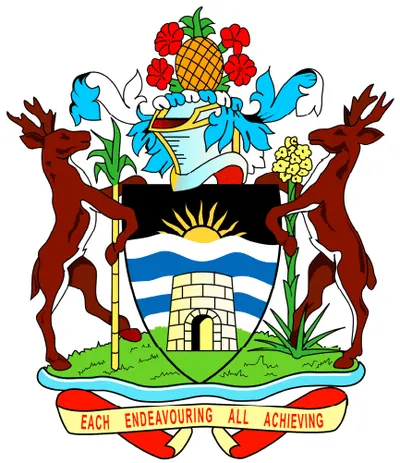
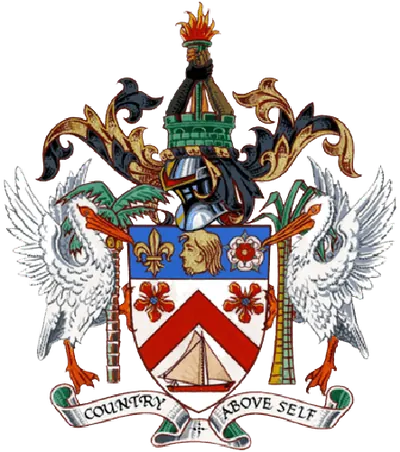
Established in 1984, the Citizenship Programme of St. Kitts and Nevis holds the distinction of being the world’s oldest programme of its kind.
The programme is administered by the Citizenship Unit (CIU), a government authority operating under a Board of Governors appointed by the Prime Minister, Dr. Terrance Drew.
This commitment to continuous compliance has been noted by international observers as a meaningful step toward aligning the programme with evolving global standards.
Investment Routes
The programme currently offers four main investment pathways, each designed to address a different investor profile. The Sustainable Island State Contribution (SISC) is the programme’s flagship non-refundable contribution route.
A minimum of USD 250,000 is required for a single applicant or a family of up to four, with the funds directed toward seven national development priorities, including renewable energy, healthcare, education, and food security. This option requires no property management and carries no resale obligations, making it the most administratively straightforward route available.
The Public Benefit Option (PBO) allows investors to support approved national infrastructure and development projects with an investment of USD250,000. This route reflects the programme’s evolving focus on channelling investment into areas of genuine national impact, a priority that the Board of Governors has spoken about publicly in recent years.
For investors seeking a tangible asset alongside their citizenship, the Developer’s Real Estate Investment Option requires a minimum purchase of USD 325,000 in a designated unit within a government-approved development. The property must be held for a specified period before it becomes eligible for resale.
The Private Real Estate Investment Option is the most exclusive route, requiring a minimum property purchase of USD 600,000 in a private real estate holding. This pathway appeals to investors who seek direct ownership in the primary market rather than a stake in a development project.
Dominica
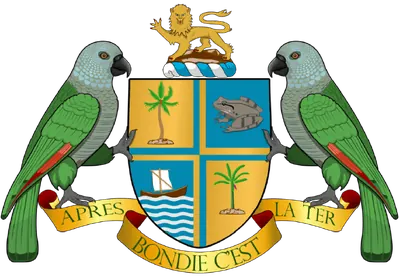
The Commonwealth of Dominica introduced its Citizenship by Investment Programme in 1993, making it one of the longest-standing CBI frameworks in the world.
Dominica, known as the Nature Isle of the Caribbean, is an identity that informs its CBI programme . Investment revenues have remained great source to support environmental resilience, social infrastructure, and long-term sustainable development. Following the devastation caused by Hurricane Maria in 2017, CBI funds played a central role. It has financed the reconstruction of over 2,000 climate-resilient homes for affected families, with an ambition to deliver 5,000 in total.
The programme is administered by the Citizenship by Investment Unit (CBIU), a dedicated government authority within the Ministry of Finance. The CBIU manages all applications centrally. The CBIU is also responsible for ensuring that due diligence standards are consistently applied across every submission.
Investment Routes
Dominica offers two investment pathways under its programme.
The Economic Diversification Fund (EDF) is a non-refundable government contribution route. For a single applicant, the minimum contribution is USD 200,000. For a family of up to four, the total is USD 250,000, with additional fees applied for each subsequent dependent. The EDF finances public and private sector development projects, including tourism, renewable energy, and agricultural modernisation.
This route requires no asset management. It offers a chance of a most accessible direct citizenship contribution option in the Caribbean.
The Real Estate Option allows applicants to invest a minimum of USD 200,000 in a government-authorised property. The investment must be held for a minimum of three years following the grant of citizenship. Government fees apply in addition to the investment amount and vary depending on family size.
Grenada
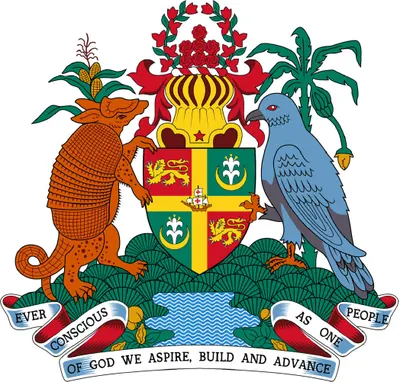
Grenada’s Citizenship by Investment Programme was established under the Citizenship by Investment Act No. 15 of 2013. With the Investment Migration Agency (IMA) Grenada serving as the government authority. The authority is responsible for overseeing the programme’s operations, due diligence processes, and authorised agent approvals.
The programme has built a strong international reputation since its relaunch. It is driven by a combination of rigorous governance, competitive pricing, and a singular strategic feature that distinguishes it from every other Caribbean CBI programme: Grenada’s bilateral E-2 Investor Visa Treaty with the United States.
Under this arrangement, Grenadian citizens who meet the qualifying criteria may apply for the US E-2 Investor Visa. It is a non-immigrant visa that permits approved individuals to live and work in the United States through a qualifying business investment. No other Caribbean CBI programme carries this benefit.
Investment Routes
The programme offers two investment pathways.
The National Transformation Fund (NTF) is a non-refundable government contribution option. The minimum required is USD 235,000 for a single applicant or a family of up to four. This route carries no property management obligations. It is the most straightforward path to Grenadian citizenship for families of up to four members.
The Approved Real Estate Option requires a minimum investment of USD 270,000 in a government-designated property, along with a minimum additional non-refundable contribution of USD 50,000. Approved projects largely consist of luxury resort developments and hotel complexes managed by internationally recognised brands. The property must be held for a minimum of five years following the grant of citizenship.
Conclusion
The landscape of alternative citizenship has matured considerably. Programmes that once operated with limited international oversight now operate under comprehensive due diligence frameworks. They have introduced mandatory interview requirements, and in some cases, ongoing post-citizenship background screening. For European investors, this is a development worth acknowledging. A second citizenship obtained through a credible, well-governed programme carries a different weight than one issued under lighter oversight.
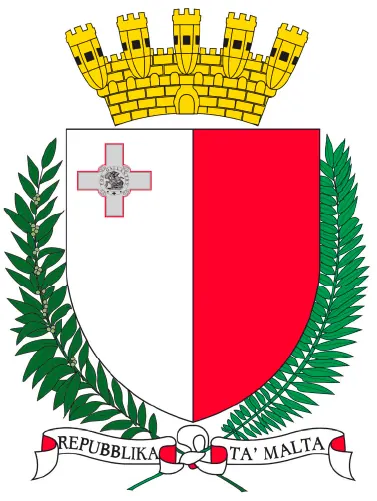
St. Kitts and Nevis and Dominica continue to lead in the Caribbean on the basis of longevity, institutional credibility, and a demonstrated track record. Grenada’s programme adds a dimension unavailable elsewhere in the region. Malta, while restructured, remains a legitimate pathway for individuals whose contributions and achievements genuinely meet the merit threshold. Turkey offers a fast, direct route to naturalisation through one of the more accessible investment frameworks currently in operation.
Each programme involves a significant financial commitment and a legal process that follows an approach with qualified professional guidance. Applicants will further engage with authorised agents listed on the official government registers of the respective programmes.