












Modern wealth management places real importance on family security, contingency planning and cross-border mobility. For high-net-worth individuals, establishing a contingency plan is not only an individual business strategy but also a long-term, multi-generational decision. The Caribbean is widely regarded as the birthplace of modern citizenship by investment (CBI), and the region offers some of the more stable and efficient economic programmes available.
When these options are considered from a family-first perspective, a single approach rarely suits everyone. Each island nation has distinct legislation governing who can be included in an application, how dependency is defined and how costs change as family size increases. This analysis sets out the leading Caribbean options to help you consider which programme may provide the right structure for your family.
You will find an overview of the rules on family inclusion across the region, how costs are structured and how a family’s international standing can be preserved for future generations. Choosing the right jurisdiction is an important first step, and clear information can help you make it with confidence.
Which framework can accommodate larger families and extended dependants?
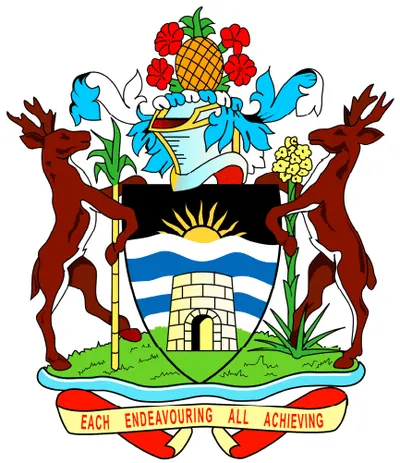
When a family extends beyond the standard four-person unit to include older children, dependent parents or grandparents, Antigua and Barbuda offers a structure designed for this. In particular, the Antigua and Barbuda Citizenship by Investment Programme features an investment route through its National Development Fund (NDF) tailored for larger families of six or more.
For larger families, adding each additional person under some programmes can involve compounding government and processing fees that change the total capital required. Antigua and Barbuda addresses this by capping the base contribution for a family of six, which can make it a practical option for multi-generational households where a primary investor is including several dependent children alongside elderly relatives.
Antigua and Barbuda also allows the inclusion of dependent parents and grandparents who are financially supported by the main applicant. This can help families remain together, so that older relatives receive the same protection and security as the rest of the household.
How does St. Kitts and Nevis approach due diligence for families?
As one of the pioneers of the investment migration industry, St. Kitts and Nevis offers a well-developed framework with a strong reputation for rigorous due diligence. The Sustainable Island State Contribution (SISC) route is suited to families who value careful vetting, legal clarity and long-term stability.
The St. Kitts and Nevis Citizenship Programme is notable in how it treats some extended family members, such as siblings. Under specific legislative provisions, the main applicant or their spouse can include unmarried, childless brothers and sisters who are 30 years of age or younger and fully dependent on the investor. This sibling provision can be helpful for families who manage shared family offices or joint financial structures.
The country’s Citizenship maintains a secure and rigorous vetting process. This means documentation must be complete and accurate, but it can also give families confidence that their alternative status rests on a well-respected legal foundation that helps protect their wealth and identity.
Why is the real estate route often suitable for larger families?
While direct government contributions are straightforward, investing in government-approved real estate projects, such as resort developments or approved villa shares, can be a preferred route for larger families. With the real estate route, the baseline investment requirement generally remains fixed regardless of how many family members are added to the application.
For example, where a real estate threshold is set at a particular amount, that property can satisfy the main investment requirement for a single applicant or for a family of six. Per-person government, due diligence and registration fees still apply, but the core capital is tied to a tangible asset rather than multiplying for each family member.
Approved real estate can also give a family a physical base in the Caribbean, whether as a holiday home or as a potential source of rental income managed by hospitality operators. For families considering a five-to-seven-year horizon, the asset may later be sold, which can allow recovery of the primary capital while the family retains its alternative legal status.
How does the family application process work with CS Global Partners?
Working through international immigration law and government administrative requirements calls for a structured approach. CS Global Partners aims to simplify this by managing documentation, compliance and government liaison through a clear, client-focused process.
- Initial family evaluation: our team reviews your family structure, including the ages, dependency status and long-term goals of each member, to suggest a suitable jurisdiction.
- Document compilation and pre-vetting: we help gather the required civil documents, such as birth and marriage certificates and financial records, and carry out internal due diligence to support compliance.
- Official submission: your application is submitted to the relevant nation’s Citizenship by Investment Unit (CIU) for government vetting.
- Investment fulfilment: once an approval-in-principle is received, you transfer the required contribution or complete the real estate transaction.
- Status conferral: the host nation issues the certificates of registration, confirming citizenship that can generally be passed to future generations.
Conclusion: securing your family’s multi-generational future
Choosing a Caribbean citizenship by investment programme is an important decision for a family’s security, mobility and financial legacy. Whether the main appeal is Dominica’s affordability, Antigua and Barbuda’s pathways for larger families, or the established infrastructure of St. Kitts and Nevis, the underlying aim is generally the same: helping to protect your family across a range of circumstances.
Because regulations change and each family’s requirements differ, working with an experienced, government-aligned advisory firm can be valuable. CS Global Partners offers clear, comprehensive guidance to help families work through these legal structures.
To take the next step toward a cross-border legacy for your children and grandchildren, contact CS Global Partners to arrange a private consultation with our senior advisers.
This information is provided for general guidance only and does not constitute legal or financial advice. Citizenship by Investment programmes are subject to change. Prospective applicants should seek independent professional advice specific to their circumstances.
Frequently asked questions
Which Caribbean programme is the most cost-effective for a family of four?
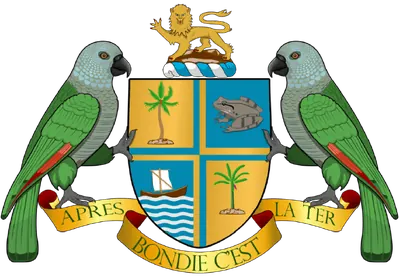
The Commonwealth of Dominica is widely recognised as one of the more cost-effective routes for a standard family of four. Its Economic Diversification Fund is structured to allow affordable additions for immediate family members, which can make it a practical choice for investors focused on efficient capital allocation.
Can I include adult siblings in a Caribbean citizenship application?
In certain jurisdictions, such as St. Kitts and Nevis and Grenada, adult siblings can be included under specific conditions. In St. Kitts and Nevis, siblings generally must be unmarried, childless, aged 30 or under and fully dependent on the main applicant.
Do children inherit citizenship automatically under these programmes?
Under programmes such as those of Dominica and St. Kitts and Nevis, citizenship is generally lifelong and can be passed to future generations by descent. Newborn children can usually be registered for status even after the primary application has been approved.
What is the age limit for dependent children in Caribbean applications?
Many Caribbean programmes allow dependent children to be included up to the age of 30. To qualify, adult children over 18 generally need to be full-time students at a recognised institution and fully supported by the main applicant.
{ "@context": "https://schema.org", "@type": "FAQPage", "mainEntity": [ { "@type": "Question", "name": "Which Caribbean programme is the most cost-effective for a family of four?", "acceptedAnswer": { "@type": "Answer", "text": "The Commonwealth of Dominica is widely recognised as one of the more cost-effective routes for a standard family of four. Its Economic Diversification Fund is structured to allow affordable additions for immediate family members, which can make it a practical choice for investors focused on efficient capital allocation." } }, { "@type": "Question", "name": "Can I include adult siblings in a Caribbean citizenship application?", "acceptedAnswer": { "@type": "Answer", "text": "In certain jurisdictions, such as St. Kitts and Nevis and Grenada, adult siblings can be included under specific conditions. In St. Kitts and Nevis, siblings generally must be unmarried, childless, aged 30 or under and fully dependent on the main applicant." } }, { "@type": "Question", "name": "Do children inherit citizenship automatically under these programmes?", "acceptedAnswer": { "@type": "Answer", "text": "Under programmes such as those of Dominica and St. Kitts and Nevis, citizenship is generally lifelong and can be passed to future generations by descent. Newborn children can usually be registered for status even after the primary application has been approved." } }, { "@type": "Question", "name": "What is the age limit for dependent children in Caribbean applications?", "acceptedAnswer": { "@type": "Answer", "text": "Many Caribbean programmes allow dependent children to be included up to the age of 30. To qualify, adult children over 18 generally need to be full-time students at a recognised institution and fully supported by the main applicant." } } ] }