



















The latest trends show that individuals seeking alternative citizenship are motivated less by mobility privileges and far more by the need for resilience, predictability, and future-proof environments.
The World Citizenship Report 2025 outlined that the safety, quality of life, and long-term economic resilience are the most decisive motivators for globally mobile individuals, with environmental stability and governance strength emerging as critical components of these categories.
Artificial intelligence (AI) and climate change have reshaped the very meaning of what an additional citizenship should offer including security in moments of disruption and access in moments of technological transition.
Climate Change is Redrawing the Geography of Security
Climate volatility has become a measurable driver of citizenship demand. Extreme weather, rising reconstruction costs, and repeated infrastructure shocks are prompting investors to evaluate jurisdictions through one fundamental question of safety and security.
The WCR 2025 explicitly highlights climate-related risk as a growing factor inside the broader Safety & Security motivator, noting that environmental instability now affects perceptions of national resilience.
Countries that score highly for rule of law, political neutrality, and physical security also tend to be those at the forefront of climate mitigation policy, as per the report.
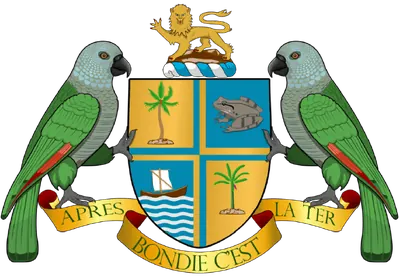
This is where small states, especially climate-forward Caribbean countries have repositioned themselves. Dominica and St. Kitts and Nevis, both ranked in the top third of global citizenships for quality of life and environmental performance, are repeatedly cited for their climate-resilient infrastructure, sustainable development policies, and eco-conscious growth models.
These states are demonstrating that resilience is not just a matter of geography, but of governance choices. For many investors, alternative citizenship is no longer optional insurance, it has become a strategic continuity plan.
The WCR insight also warns that “climate instability is already reshaping security considerations” a direct indication of how quickly environmental risk is transforming long-term planning.
The Rise of AI: Access, Talent, and Competitive Citizenship
While climate change pushes investors to think about physical safety, AI pushes them to think about economic participation. Automation is restructuring production, employment, and geopolitics. Nations that succeed in attracting AI talent, enabling data-driven economies, and building innovation ecosystems are the ones that will command global competitiveness.
The WCR 2025 notes that jurisdictions with strong digital infrastructure and technology governance frameworks demonstrate higher stability and improved long-term opportunity scores.
“These environments align closely with investor expectations about the future of work and the industries most likely to survive AI-induced disruption” World Citizenship Report 2025.
Governments worldwide are already competing in this space. While major economies have their own talent-visa regimes, investor citizenship frameworks play a parallel role. They allow families to access countries with world-leading research centres, stable education systems, and future-ready job markets.
For many global families, obtaining citizenship in technologically advanced or innovation-oriented states is effectively a way to plug into the AI economy, ensuring both generational mobility and professional relevance.
Why Investors Now View Citizenship as Resilience Infrastructure
Across all five motivators of the World Citizenship Index , Safety & Security, Quality of Life, Economic Opportunity, Global Mobility, and Financial Freedom, Risk Management has become the underlying theme. The index’s findings show that 36.9% of HNWIs prioritise quality of life as their top motivator.
On the other hand, Safety and security ranks immediately behind, driven in part by climate and geopolitical instability. Caribbean jurisdictions with clear sustainability strategies are experiencing rising interest due to their environmental policies and disaster-resilient development models.
The report repeatedly underscores a key shift, noting global citizens are prioritising future-readiness over traditional mobility advantages.
How Climate Change and AI Are Rewriting Citizenship Strategy
1. Citizenship as a Climate Buffer
The WCR highlights that vulnerability to climate shocks increasingly shapes the perceived value of nationalities. Investors are drawn toward microstates that combine political neutrality with green development pathways, jurisdictions capable of preserving normalcy when larger states face breakdown.
2. Citizenship as Access to Innovation
AI-driven economies require flexible borders. Countries leading in digital infrastructure consistently outperform in economic opportunity rankings. It has indicated investors’ growing interest in citizenship frameworks that enable seamless entry into innovation clusters, as per the report.
3. Citizenship as Long-Term Insurance
Safety, in the WCR’s formulation, is about more than crime or conflict. It includes environmental sustainability, good governance, and resilience planning, factors now deeply intertwined with climate and technological disruption.
Small States, Big Advantage
One of the most striking findings across the WCR is the rise of small, strategically governed states as credible resilience hubs. These countries may lack geographic size, but they compensate with:
- Agile policy frameworks
- Climate-resilient infrastructure
- Stable governance structures
- Environmental stewardship
- Investor-focused development programmes
Dominica’s long-term climate recovery agenda and St. Kitts and Nevis’ adherence to sustainability-based economic reform have helped position both countries as future-secure citizenship options. It is important for especially for families looking to hedge against environmental upheaval.
Climate change and artificial intelligence are redrawing the global citizenship map faster than any previous force.
The WCR 2025 captures this shift succinctly. The report noted that citizenship has transformed from a marker of identity into a strategic instrument for protecting life, wealth, and generational continuity. In a world shaped simultaneously by natural and technological disruption, global citizenship is no longer a luxury. It is the architecture through which families are building safety, opportunity, and relevance for the decades ahead.