




















From world-class wines and panoramic coastlines to tech entrepreneurship and a sophisticated financial sector, South Africa remains one of the most compelling stories on the continent. But a growing number of its citizens no longer believe that the country has their future in mind. A review of the 2025 World Citizenship Report (WCR) reveals what many have felt instinctively: South Africa is losing ground across nearly every index that matters for long-term stability, prosperity, and security.
A steep decline across key motivators
Between 2022 and 2025, South Africa’s overall score on the World Citizenship Index fell from 58.4 to 49.9, dropping the country from 75th to 102nd globally. While there was a brief recovery in 2025 from its 2024 low point of 119th, the long-term trend remains downward.
Looking deeper, the sharpest decline has been in the safety and security category. Once ranked 79th in 2022, South Africa fell to 129th by 2025. This decline reflects sustained concerns around violent crime, political instability, and weakened rule of law. Economic opportunity, a category in which South Africa had held steady for years, also dropped dramatically in 2025, falling from 52nd place to 88th.
Quality of life took a brief dive before rebounding: from 97th in 2022 to 126th in 2024, and up to 89th in 2025, surpassing its original ranking. Global mobility and financial freedom, by contrast, remained largely flat, with only minor shifts. But taken together, the five motivators paint a concerning picture for citizens who have worked hard to build wealth and raise families in a country that increasingly cannot deliver on safety, predictability, or opportunity.
Context behind the collapse
The data tells a story of deterioration, but it does not exist in a vacuum. Over the past three years, South Africans have seen national politics dominated by infighting, power struggles, and policy gridlock. Landmark legislative decisions such as the Expropriation Without Compensation (EWC) proposal, the Basic Education Laws Amendment (BELA) Bill, National Health Insurance (NHI) plans, and transformation mandates have deepened political polarisation. Layered on top of this are rolling blackouts, endemic corruption, state capture fallout, and persistent failures in law enforcement. Trust in public institutions continues to erode.
South Africa is a founding BRICS member and holds substantial negotiating power within the bloc. However, participation in BRICS has not shielded the country from internal challenges. The WCR notes that despite the geopolitical influence of BRICS+, domestic governance failures continue to drive instability. Voter dissatisfaction reached new highs in the 2024 elections, with coalition politics becoming necessary for opposition parties to gain traction. Amid these shifting sands, high-net-worth individuals (HNWIs) have begun to act with urgency.
A future worth planning for
What happens next is not necessarily a binary decision to stay or leave. Emigration, as many South Africans are discovering, exists on a spectrum. It may begin with financial planning strategies: moving money offshore, investing in international property, or spending just enough time abroad to be classified as a non-resident for tax purposes. For others, it evolves into dual residency or full relocation. What all these paths have in common is a search for predictability and protection.
This is where Citizenship by Investment (CBI) and Residency by Investment (RBI) options come into play. They offer structured and legal pathways to a second nationality or residence, enabling families to expand their global footprint, mitigate regional risks, and plan for generational wealth security. In countries where crime is surging and local currency is unstable, the ability to relocate or diversify one’s holdings is more than a luxury—it’s a form of insurance.
Among African HNWIs, 40.9% cite quality of life as the most important feature of citizenship. Many are driven by concerns over healthcare, environmental sustainability, and ensuring a secure future for their children. These motivators are particularly significant for South Africans, who tend to have larger families and feel deeply the impact of unreliable public systems. Yet the numbers are telling: South Africa has lost 12% of its dollar millionaires over the past decade, with R28 billion in wealth flowing out in the past year alone.
Safety and security vs. quality of life
While the data paints a grim picture, the contrast between danger and daily life in South Africa is complex. The U.S. Department of State currently lists South Africa as a Level 2 travel advisory: Exercise Increased Caution due to crime, civil unrest, and terrorism. Violent crimes such as robbery, carjacking, and kidnapping are common in metropolitan areas, particularly after dark. Public confidence in law enforcement has declined to such an extent that the country now employs more private security officers than police and military combined.
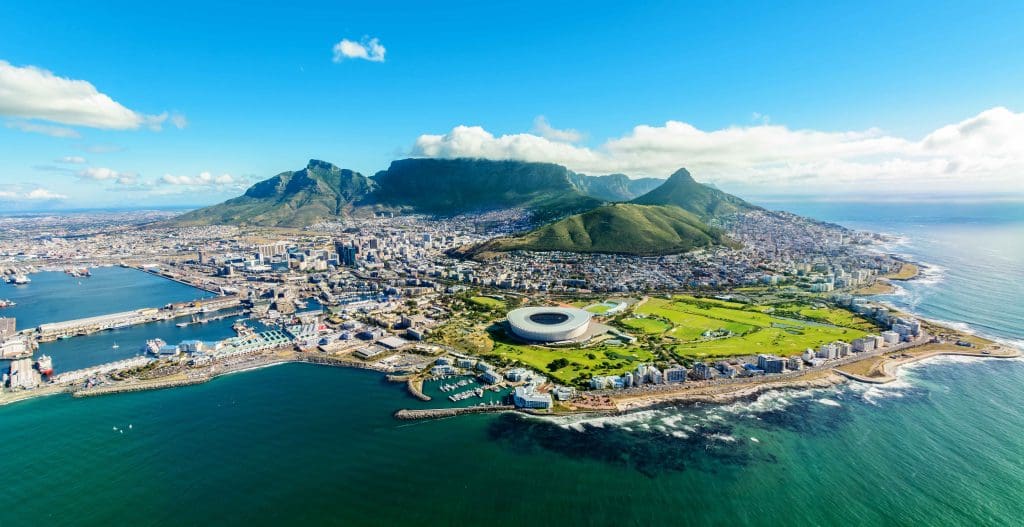
And yet, Cape Town was named Time Out’s Best City in the World for 2025. The V&A Waterfront remains one of Africa’s most visited destinations. Over R2.5 billion in property sales to international buyers were recorded in Cape Town alone in early 2025. Tourist arrivals in the first quarter of the year exceeded 2 million, with visitor feedback remaining largely positive. This contradiction lies at the heart of the South African dilemma: a country of exceptional beauty and cultural richness, battling persistent internal threats.
Where to next?
South Africans traditionally look to familiar destinations like the UK, Australia, and Europe for emigration. However, the tides are shifting. The UK is seeing its own mass exodus of HNWIs due to global income taxation and the closure of investor programmes. The U.S. is making legal immigration harder and costlier. Portugal and Spain are scaling back residency options. Even the UAE, a hotspot in recent years, faces concerns over its proximity to geopolitical flashpoints.
As traditional avenues narrow, lesser-known destinations are gaining ground. Citizenship by investment options in the Caribbean, such as St. Kitts and Nevis and The Commonwealth of Dominica, for example, combine geopolitical neutrality, stability, and affordability. These jurisdictions are increasingly viewed not just as travel gateways, but as life rafts for wealth preservation, asset protection, and long-term planning.
The bottom line
In an era of uncertainty, citizenship is no longer just about birthplace—it’s a strategic asset.
Micha Emmett, CEO of CS Global Partners, states “the 2025 World Citizenship Report underscores a simple but profound truth: the human condition remains at the heart of all global shifts. The desire for safety, mobility, economic opportunity, financial certainty and quality of life transcends borders. While there may be no perfect country, the WCR provides a strategic roadmap for families seeking to optimise their futures amidst the uncertainty.”
South Africa’s decline in global rankings over the past three years is not an anomaly; it is a data-driven warning. For honest, hard-working South Africans, the question is not just whether to leave, but how best to prepare. CBI and RBI Programmes are part of that answer. They provide the tools to remain globally agile in an unpredictable world, and the foundation to build a future that is secure, mobile, and dignified.


