









30 days. That’s all it took for the geopolitical landscape to shift in ways that would have seemed impossible just months ago. As we close out January 2026, we are witnessing a recalibration of global power dynamics, which has major implications for how we think about citizenship and residency.
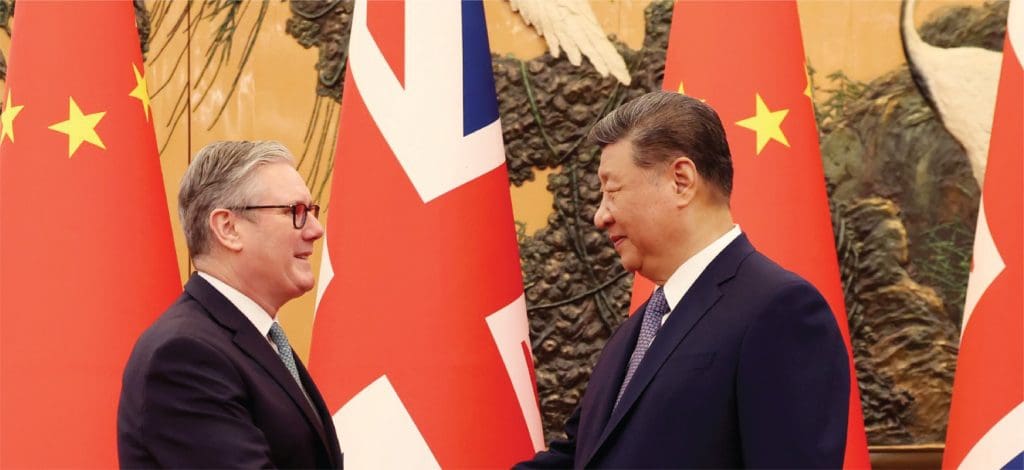
The headlines tell a remarkable story. Within the span of two weeks, leaders from Canada, the European Union, and the United Kingdom have all made the journey to Beijing for high-level meetings with President Xi Jinping.
Then came Prime Minister Keir Starmer’s announcement: a comprehensive deal with China that includes visa-free travel for British citizens, allowing them to stay in China for up to 30 days without a visa.
The significance cannot be overstated. Until this agreement, British citizens were notable outliers among major Western economies, requiring visas to visit China while travellers from France, Germany, and Australia enjoyed visa-free access. Starmer’s visit resulted in a bevvy of new agreements spanning trade, market access, and support for British businesses across finance, healthcare, education, and manufacturing sectors.
“As one of the world’s economic powerhouses, businesses have been crying out for ways to grow their footprints in China,” Starmer said during his Beijing visit. “We’ll make it easier for them to do so – including via relaxed visa rules for short-term travel – supporting them to expand abroad, all while boosting growth and jobs at home.”
While critics would argue that this is just diplomatic theatre, the shift should instead be seen as growing pragmatism. An acknowledgement of shifting economic realities and the recognition that the world’s centre of gravity is moving.
A shift in the global balance
For decades, the global West has enjoyed unquestioned dominance in setting global norms, from economic policy to mobility frameworks. As a result, Western citizenship has been the gold standard, offering unparalleled access and opportunity. To be clear, they still represent exceptional value – the US, UK, Canada, and EU countries all continue to be among the most sought-after citizenship and residency destinations globally.
But the last month has demonstrated that this dominance cannot be taken for granted. The speed at which diplomatic relationships are being reconfigured, trade partnerships reimagined, and visa policies rewritten should serve as a wake-up call to anyone who believes the global order is static.
The UK’s new partnership with China extends far beyond visa policy. It includes an exploration of a bilateral services agreement that would establish clear and binding rules for UK firms doing business in China. As Business and Trade Secretary Peter Kyle noted, “There are huge growth opportunities for services, currently underweighted in our exports to China, from the legal and financial sectors to health and education.”
This acknowledgement, that Western economies need to position themselves more strategically in Eastern markets, represents a change from the policies of even five years ago.
We are entering an era where geopolitical flexibility isn’t just an advantage, it’s a necessity. The families and individuals who thrive in this new landscape will be those who have anticipated change, not those who react to it when options become limited.
The broader picture for investment migration
The investment migration industry exists precisely because smart, forward-thinking individuals understand that optionality is valuable. The events of January 2026 underscore why our work is so critical.
- Pace of change: International relations that seemed frozen can transform almost overnight. Visa policies, trade relationships, and diplomatic access can shift with stunning speed. Those who wait until geopolitical turbulence affects them directly will find their options dramatically narrowed.
- Diversification is key: Just as no prudent investor puts all their capital in a single asset class, no globally-minded family should tie their future to a single jurisdiction. Alternative residency and citizenship options provide insurance against policy changes, economic disruption, and political instability.
- East and West are not binary: The old paradigm of choosing between Western and Eastern jurisdictions is becoming obsolete. The most sophisticated families are building portfolios that span regions, recognising that different countries offer different strategic advantages, and that these advantages can shift over time.
This moment should prompt us to think more creatively about global mobility strategy. While citizenship and residency programmes in the United States, Canada, the United Kingdom, and throughout Europe remain extraordinarily valuable, and indeed, continue to dominate application flows, January 2026 has shown us the wisdom of not putting all our eggs in one basket.
The Caribbean, the UAE, and other Asian and Middle Eastern jurisdictions have been building world-class immigration programmes that offer not just strong citizenship, but strategic positioning in growth markets.
The savviest families aren’t choosing between East and West, or North and South – they are choosing all, understanding that true global mobility means having options that span the full spectrum of geopolitical possibilities.
The cost of waiting
Perhaps the most important lesson from January 2026 is the danger of complacency. Investment migration isn’t something to consider when you need it; it’s something to arrange while you still have the luxury of time and choice.
We see this repeatedly. Families who wait until geopolitical tensions affect them directly find that by then, processing times have lengthened, programme terms have changed, or in some cases, programmes have closed entirely to applicants from certain countries. The time to secure alternative residency and citizenship is when you don’t urgently need it.
The process of obtaining citizenship or residency by investment typically takes months or even years. Applications require extensive documentation, due diligence, and processing time. Those who begin this journey proactively have the advantage of choice and negotiating power. Those who wait until circumstances force their hand often find themselves with limited options and elevated costs.
Understanding the landscape
For families and individuals considering investment migration, understanding the full landscape of options has never been more important.
CS Global Partners has just published its comprehensive Investment Migration Watch Report, which analyses programs worldwide, examines trend data, and provides strategic insights for navigating this complex field.
The report reveals that while demand for Western programs remains robust, there’s growing sophistication in how applicants are thinking about global mobility strategy. Rather than focusing on a single destination, leading families are increasingly pursuing multiple residencies and citizenships that complement each other.
The road ahead
As we move deeper into 2026, the trends we’ve observed in January are likely to accelerate rather than reverse. The world is becoming more multipolar, and the relationships more nuanced. In this environment, agility beats allegiance to any single system.
This doesn’t mean abandoning traditional values or preferred jurisdictions. The United States, the United Kingdom, Canada, and Europe will continue to be magnets for global talent and capital. What it means is supplementing these connections with alternatives that provide resilience and optionality.
The diplomatic rush to Beijing, the visa announcements, the rapid reconfiguration of international relationships, these aren’t outliers.They are signals of a new normal where change happens faster than most are prepared for.
For those paying attention, the message is clear: the time to plan for a more complex, multipolar world is now. Not next year, not when geopolitical tensions directly affect you, but today, while you still have the full array of options before you.
The geography of power is being redrawn. Make sure your family’s position is secure, diverse, and resilient enough to thrive regardless of where the lines are ultimately drawn.
- Written by Micha-Rose Emmett (CEO of CS Global Partners).