




















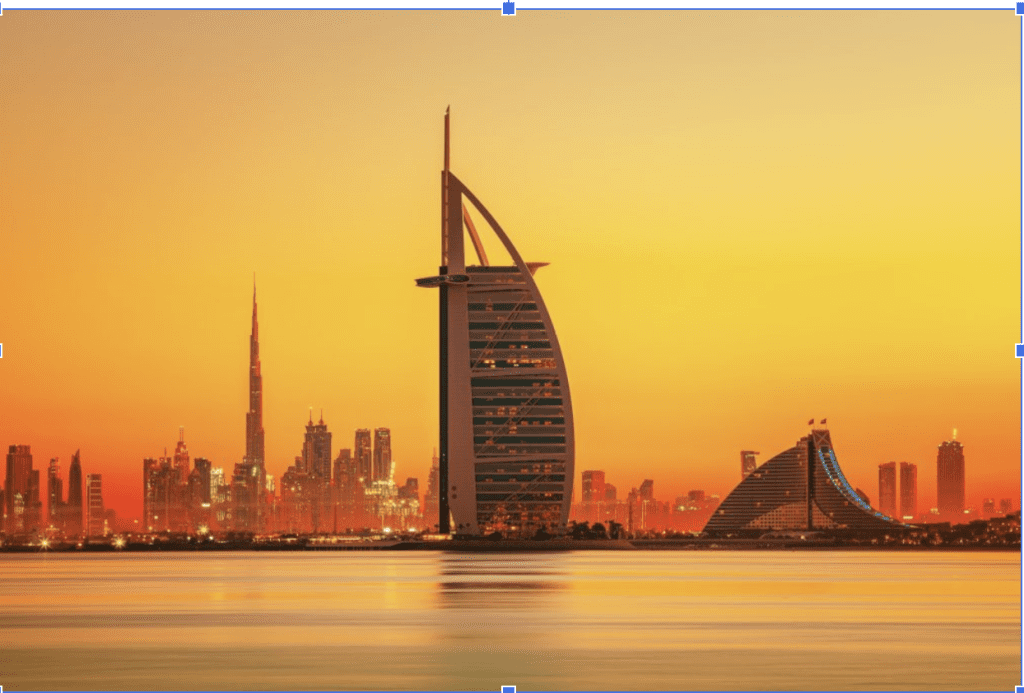
The United Arab Emirates (UAE) has been placed among the world’s leading nations for quality of life in our newly published Good Life Index 2026.
According to the Index, the UAE is the highest-placed Arab nation globally, ranked ahead of Italy, South Korea, and Greece, and leading all fellow Gulf states.
For a country that marked its 50th anniversary just a few years ago, the result reflects one of the more rapid development trajectories in modern history.
Once a Federation of desert sheikhdoms sustained largely by pearl diving and coastal trade, the UAE has evolved into a great place. It is place where world-class infrastructure, a cosmopolitan standard of living, and growing environmental policy ambition coexist.
The Index suggests those qualities have proven durable even amid a difficult regional climate.
“The UAE’s standing is not merely a reflection of oil wealth. It is evidence of deliberate, sustained investment in the full spectrum of human well-being,” CS Global Partners said.
HEALTHCARE
Healthcare is identified as one of the Index’s core pillars, and one where the UAE has invested significantly. The country operates a mandatory health insurance system. It is designed to provide broad access to medical services for both citizens and the large expatriate population.
Hospitals in Dubai and Abu Dhabi draw medical professionals internationally and are generally ranked among the region’s better-equipped facilities.
Life expectancy has risen over recent decades and now sits among the higher figures in the Arab world. The country’s Covid-19 vaccine rollout was among the fastest per capita globally. It is data point the Index cites as reflecting the institutional capacity that has come to characterise the Emirates’ public health approach.
EDUCATION
The UAE has prioritised education as a national policy objective. The country hosts branch campuses of institutions including New York University, the Sorbonne, and Heriot-Watt University, alongside a wide range of internationally accredited colleges. Dubai Knowledge Park and Abu Dhabi’s education districts have been developed to attract students and institutions from abroad.
The government has set a target of ranking among the world’s leading nations for education by 2031. National literacy rates are near-universal. The centennial vision document formally places knowledge and human capital development at the centre of the country’s long-term strategy.
STANDARD OF LIVING
The UAE is home to over 200 nationalities and has no personal income tax. Businesses operating within designated free zones benefit from zero-tariff conditions. The country’s infrastructure, including metro networks, airports, ports, and digital connectivity, is consistently assessed as among the better-developed globally. Residents generally describe daily life as convenient and well-serviced.
Crime rates are low relative to comparable economies, and personal security is frequently cited by residents, including families and women, as a meaningful factor in choosing to live in the Emirates.
These characteristics are attributed in the Index to consistent governance priorities and a stable social environment.
REGIONAL TENSIONS
The Index is published against a backdrop of significant regional instability. The Iran-Israel conflict, which escalated sharply in Feb 2026 , has generated sustained uncertainty across the Gulf.
The UAE, given its geographic position, its economic exposure to the Strait of Hormuz, and the scale of its trade and aviation links, has not been isolated from those pressures.
The effects have been tangible. Regional airspace disruptions recently have periodically affected operations at Emirates and Etihad. Gulf capital markets have experienced bouts of elevated volatility.
Businesses with regional exposure have reviewed their risk postures. The broader uncertainty around the Strait of Hormuz, through which a significant share of global oil and gas trade passes, has kept energy markets on edge.
Despite ongoing regional tensions, the President of the UAE, Mohamed bin Zayed Al Nahyan, was recently seen walking through the Dubai Mall. It is aimed at visiting cafés and restaurants, and interacting with members of the public. His presence among citizens highlights the sense of stability and normalcy in the country.
The leadership’s visible engagement with everyday life sends a clear message that daily activities continue uninterrupted. It also reflects the broader reality captured by the Good Life Index. The findings closely align with the calm and confidence currently experienced across the UAE.
The Good Life Index acknowledges the pressures but contends that the country’s fundamentals remain sound. The Index stops short of concluding the longer-term trajectory. It has noted instead that the quality-of-life indicators it measures reflect structural investments rather than short-term conditions.
“What makes Dubai Dubai is not merely its towers and its airports, it is the confidence that travellers, businesses, and residents place in it. That confidence, built over fifty years, is not dismantled by a difficult season,” CS Global Partners noted.
ENVIRONMENT
The UAE’s environmental performance is also in the Good Life Index which is one of the more notable shifts in its recent policy record. Gulf states have historically drawn criticism for high per-capita carbon emissions and heavy resource consumption, and the UAE is not exempt from that record.
In recent years, however, the country has pursued a series of large-scale clean energy initiatives. The Mohammed bin Rashid Al Maktoum Solar Park in Dubai is among the largest single-site solar installations globally. The Barakah Nuclear Energy Plant in Abu Dhabi, the first operational nuclear power station in the Arab world, contributes zero-carbon electricity to the national grid. Abu Dhabi has set a net-zero target for 2050, and the UAE hosted COP28 in 2023.
Masdar City, Abu Dhabi’s planned low-carbon urban district, remains under development as a demonstration project for sustainable urban design. The country has also committed investment to mangrove restoration, marine conservation, and water recycling. These are the areas where progress is measurable, though independent assessments of outcomes var


