








The long-standing dominance of the United States in the global economic and geopolitical order is increasingly being challenged by emerging powers, according to the newly launched World Citizenship Report (WCR) 2026 by CS Global Partners.
As the world steadily transitions toward a new multipolar reality, the report argues that the shift is reshaping everything from geopolitics and global markets to citizenship planning and long-term wealth strategies among high-net-worth individuals.
Launched under the theme “The New Normal: Citizenship in an Age of Perpetual Uncertainty,” the 2026 edition of the report states that the post-Cold War order, once built around liberal democracy, Western-led globalisation, and American primacy, is undergoing a historic structural transformation rather than a temporary geopolitical adjustment.
The End of American Primacy
The World Citizenship Report 2026 identified two core reasons behind this seismic shift.
First, the United States no longer holds the same monopoly on global power it once did, particularly as China actively works to establish a more Sino-centric world order. Second, the US’s increasing withdrawal from key international organisations has left critical gaps in global governance.
“All countries face backlash against globalisation and the rise of popular nationalism, but in the United States this has translated into an explicit retreat from its traditional overseas role,”the report noted. It added that the current geopolitical realignment is “structural rather than temporary.”
The implications extend across the Western world. National governments from Washington to Warsaw are facing voter backlash against the free movement of capital and people, forces that many blame for hollowing out the middle classes of Europe and North America over the past generation.
Key Findings
Even NATO, the cornerstone of post-war Western security, is straining under the weight of its original bargain. As the report puts it, the arrangement in which America bore the bulk of defence spending while European allies reduced their military commitments “has become unsustainable” in the current environment.
The report draws a long historical parallel to contextualise the moment. Every dominant power, he argues, eventually confronts rising challengers, just as Britain’s nineteenth-century supremacy was gradually eroded by a rising Germany, Japan, and ultimately the United States itself. What is emerging now is not American collapse, but something in many ways more complex: a fragmented multipolar system in which influence is distributed, contested, and no longer anchored by a single unchallenged power.
Micha Emmett, CEO of CS Global Partners, frames this fracturing with striking clarity,“The world feels increasingly bipolar. Trade corridors shift, alliances strain, and the post-1945 architecture no longer serves as the quiet scaffolding it once did.” Micha Emmett, CEO, CS Global Partners, noted.
It is a description that cuts through the academic language of geopolitical analysis and arrives at something more visceral, the lived experience of a world that no longer feels reliably held together.
Priorities of HNWIs in a fragmented world
The findings of the WCR 2026 also examined how these geopolitical shifts are influencing global security dynamics, particularly in the Middle East. The report argues that Western and Israeli assessments of Iran’s regional influence may overstate the scale of the threat beyond the immediate regional context.
While acknowledging that Tehran poses a genuine threat to Israel, he questions whether the situation necessarily warrants a broader global military response. According to the report, such geopolitical fragmentation is increasingly shaping the thinking of globally mobile wealth.
High-net-worth individuals are no longer making decisions based solely on business opportunities or financial returns, but are increasingly prioritising long-term security, family resilience, and generational protection.
The findings reveal that access to better education pathways and long-term family security are becoming more influential in citizenship decisions than pure business motives in an increasingly fragmented world order.
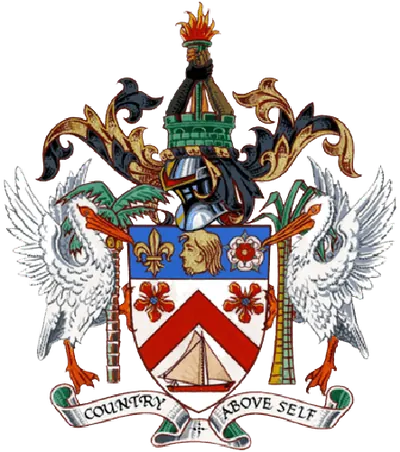
In this environment, the findings of the report argue that the citizenships carrying the greatest long-term value are those capable of providing economic, geopolitical, and institutional stability. The WCR 2026 specifically identifies countries such as the United States, Switzerland, and Singapore, alongside “back-up countries” including St. Kitts and Nevis and the Commonwealth of Dominica.
The report’s findings strongly align with this perspective. Approximately 15% of respondents already hold dual citizenship, while 5% hold three or more citizenships.
US’ ranking in World Citizenship Report
Although business and professional opportunities remain the leading motivation for pursuing second citizenship at 29.9%, family security and generational protection emerge as dominant priorities when respondents consider long-term planning for their children.
The report describes this behavioural transformation as a historic inflexion point. In the emerging multipolar world, affluent families are increasingly building what the report refers to as “citizenship portfolios” designed to hedge against geopolitical fragmentation, preserve access to global markets, and protect future generations from instability beyond the control of any single nation.
“Wealthy parents no longer chase only elite universities,” the report states. “They build citizenship portfolios that hedge against fragmentation, secure access to the best global markets, and protect the next generation from forces beyond any single nation’s control.”
The changing global order is part of the report’s Economic Opportunity rankings, where China secured the top position globally, followed by the United States and Ireland.
Ultimately, the World Citizenship Report 2026 concludes that the end of uncontested American monopoly power should not be a crisis to reverse. It is a structural transformation that affluent individuals and globally mobile families must increasingly learn to navigate in an era defined by shifting geopolitical influence and long-term uncertainty.